
What is Teen Patti?
Teen Patti is a staple of Nepalese gaming culture, though its roots lie in India. Often referred to as 'Flush' or 'Flash,' it blends elements of both Poker and Three-card brag. The name literally translates to 'three cards,' as that is exactly how many are dealt to each participant. In this guide, we will break down the core mechanics, explain the setup, and show you how to enjoy the game safely and legally via online platforms.Poker and Three-card brag. Teen Patti means three cards in English as three cards are dealt to each player in the game. In this article, we’ll go over the key concepts of Teen Patti, how the game is set up, and how you can play the game legally and safely in online casinos.

How to Play
Step 1: Placing an ante
To get things started, a central pot is formed by every player contributing an 'ante' or 'boot.' Think of the ante as a mandatory entry fee paid before any cards are dealt. This small initial wager ensures everyone has some skin in the game from the very beginning, although it's typically a fraction of the bets placed later in the round.
The main reason for the ante is to ensure there is always something to win, even if every other player decides to fold. By building up the pot early on, it adds a layer of anticipation and reward to the match, encouraging players to stay engaged and play more hands.
Step 2: Receiving your cards
Similar to Poker, Teen Patti utilizes a standard 52-card deck with the jokers removed. Each player is dealt three cards face-down. When playing at digital casinos like MCW Nepal, the shuffling and dealing are handled automatically by the system.online casinos such as MCW Nepal, the computer distributes the cards.
Phase 3: Initial Rounds and the Art of Blind BettingStep 3: The first round and blind betting
In the opening stage of Teen Patti, players often place 'blind bets'—forced wagers made before anyone has looked at their hand. This mimics the action of the game and builds the pot. The betting sequence always begins with the player seated to the immediate left of the dealer.
At this stage, you have a choice: you can fold and leave the hand, or play 'blind,' meaning you bet without seeing your cards. Blind bets are generally smaller. The action moves clockwise around the table as players decide whether to stay in blindly or quit.
The most common betting structure involves two types of blinds: the 'small blind,' which is half the standard bet, and the 'large blind,' which is the full amount. Most games follow this two-blind system, sometimes supplemented by the initial antes.
Step 4: The following rounds
A player can choose to remain 'blind' for the entire hand if they feel bold. However, if they decide to check their cards, they switch to 'seen' status. Once you are a 'seen' player, any bet you place must generally be higher than what a blind player would wager.
As the game progresses, a blind player can either fold, call the current stake, or raise it (doubling the amount). A 'seen' player has the same options—fold, call, or raise—but because they have the advantage of knowing their cards, their required stakes are higher. Regardless of the choice, the amount put in is referred to as the 'stake.'
The turn moves clockwise, and each person decides to fold, call, or raise based on their status (blind or seen). The amount you bet depends on the previous player's move: blind players typically bet 1x or 2x the stake, while seen players bet 2x or 4x. If the previous player was 'seen,' the baseline stake for a blind player is considered half of that value.
In Nepal, this process of calling and raising is colloquially known as 'chaal.'
Step 5: Demanding a showdown
The betting continues until only one person remains in the game. If everyone else folds, the last player standing wins the entire pot, regardless of what cards they are holding.
If multiple players remain, one can request a 'show' during their turn. In this scenario, the cards are revealed and compared; the hand with the highest rank takes the prize. However, requesting a show follows specific rules.
Rules for a sideshow or show:
- A 'show' is only possible if there are at least two players still active in the hand.
- If a player who has seen their cards wants to challenge a blind player to a show, they must pay four times the current wager.
- If both remaining players have already seen their cards, either can request a show by paying double the current bet.
- Once a player has folded or abandoned their hand, they are completely excluded from the show and cannot win the pot.
- When the final players reveal their hands, the one with the highest-ranking combination is declared the winner.
- If the highest hands are identical in value, the pot is split equally among the winners.
Ranking of hands
The winner is determined by a specific hierarchy of hands. Here they are, ranked from strongest to weakest:There is a ranking system to decide which player wins the pot. The different categories are listed ranked highest to lowest:
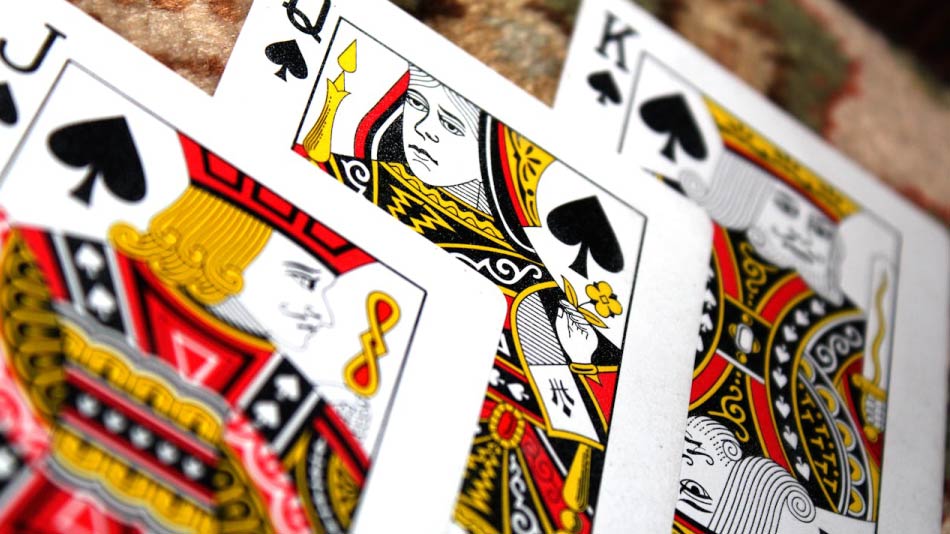
1. Three of a Kind (Trio):
Trail (Three of a Kind): Three cards of the same rank. Aces are the strongest, and Twos are the weakest.
2. Straight Flush (Pure Sequence):
Pure Sequence (Straight Flush): Three consecutive cards of the same suit. The A-K-Q sequence is the best, while 4-3-2 is the lowest.
3. Straight (Sequence):
Sequence (Straight): Three consecutive cards of different suits. A-K-Q is the highest, and 4-3-2 is the lowest.
4. Flush (Color):
Flush: Three cards of the same suit. The winner is decided by the highest card, and then by suit ranking if necessary.
5. Pair (Double):
Pair: Two cards of the same rank. The highest pair wins; if pairs are identical, the third card determines the winner.
6. No Pair (High Card):
High Card: When no other combinations are present, the player with the highest single card wins.
Playing Teen Patti Online:
For those in Nepal looking to play Teen Patti online, it's vital to choose licensed and secure platforms like MCW, which often provide great sign-up bonuses. There are several advantages to playing online:, one must opt for safe and legal online casinos like MCW,which offer the best bonuses. You may play Teen Patti online for many reasons:
- Responsible Gaming Tools: Reputable online casinos provide built-in features to help players track their spending and set personal limits to ensure gambling remains a hobby.: Online casinos frequently offer resources to assist users in controlling their spending and establishing boundaries.
- Access to Rare Games: Digital platforms often host unique game variations that you simply won't find in traditional brick-and-mortar casinos.
- Ultimate Convenience: With an internet connection, you can access the casino 24/7 from anywhere, removing the need to travel.
- Rewards and Bonuses: Platforms like MCW attract players with enticing welcome bonuses, loyalty programs, and free play opportunities.
- Fairness and Security: MCW Nepal prioritizes transparency and integrity. They use certified Random Number Generators (RNG) to ensure every deal is fair, and they operate under strict regulatory licenses. Additionally, high-level encryption keeps your financial and personal data safe.MCW Nepal are dedicated to fair play and transparency. Their games employ Random Number Generators (RNG) to ensure fair results, and they are licensed and controlled by respectable gaming organizations. Modern encryption technology protects your personal and financial information.
Ultimately, online casinos strive to provide a legal, healthy, and enjoyable environment for all gamblers.